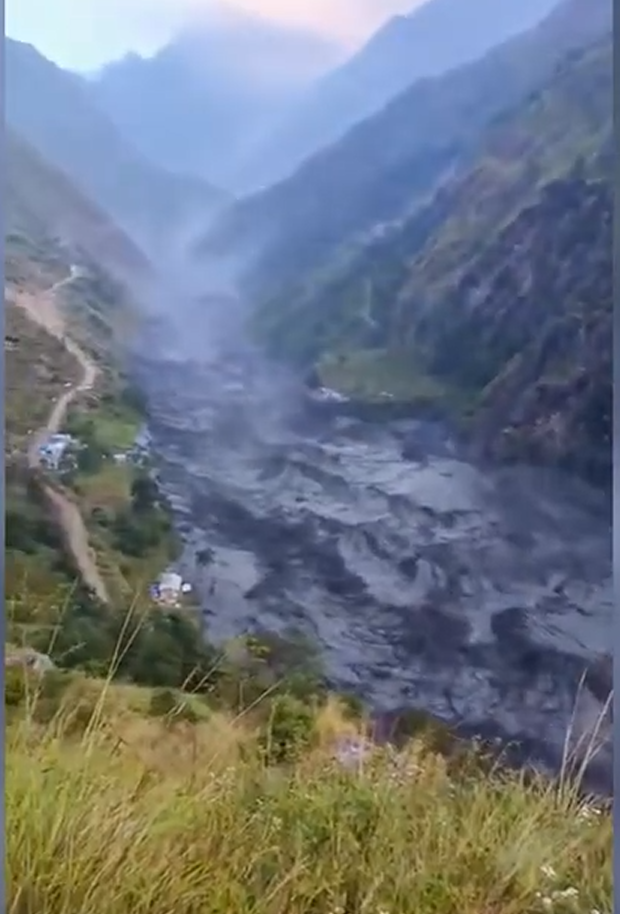
The October 11 Flash Flood Damages affected Nepal’s Manaslu region, destroying or damaging more than 24 hotels and teahouses, several bridges, and key trekking trails along the Budhi Gandaki Valley.
The flood damaged hotels, teahouses, bridges, and major trekking trails, while several villages along the river were affected. The destruction disrupted local life and made travel difficult for trekkers. Damaged access routes also interrupted the transportation of food, fuel, and other essential supplies to remote communities.
Where Did the October 11 Flash Flood Begin?
Early reports show the flood likely started in the Chumchet area of Chumnubri Rural Municipality, near Ungilung Khola. The October 11 Flash Flood reportedly began after a landslide blocked a local stream, creating a temporary natural dam.
A landslide blocked the river and formed a temporary dam. When the dam broke, a powerful surge of water and mud rushed through Syarkhola and spilled into the Budhi Gandaki River.
Early in the morning on October 11, the heavy flood carried mud, rocks, and debris downstream. As the water kept flowing, it flooded several small villages along the riverbanks lower down the valley. The resulting October 11 Flash Flood Damage spread downstream, affecting settlements and infrastructure along the Budhi Gandaki Valley.
How the Flood Affected the Manaslu Trekking Route
The October 11 Flash Flood Damage affected several important trail connections, leaving trekkers with difficult river crossings and disrupted walking routes.
Suspension Bridges Washed Away by the Flood
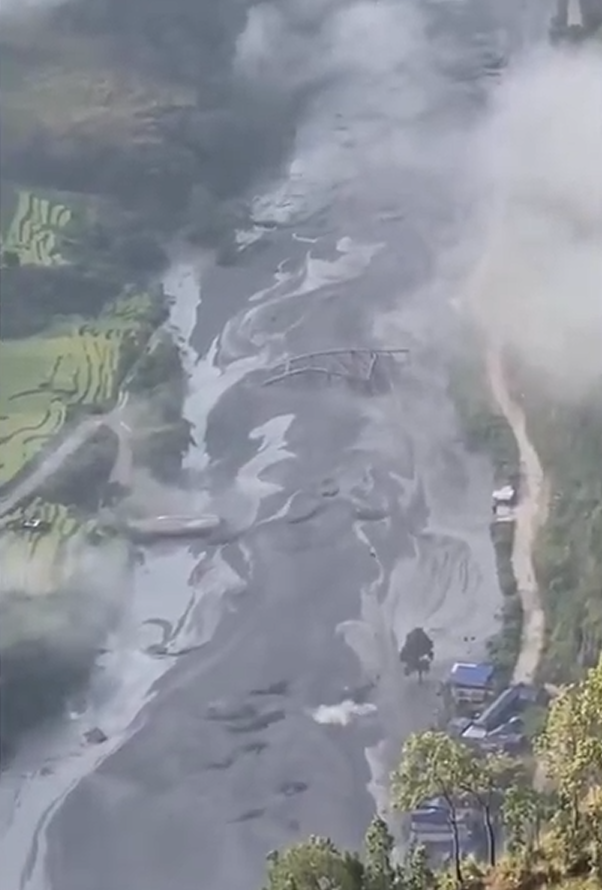
Suspension bridges are essential for crossing rivers and connecting villages along the Manaslu Circuit Trek. Trekkers rely heavily on these bridges because the steep mountain terrain offers few other safe ways to cross.
The October flood washed away several bridges and trail sections. The bridges near Sardibhir, close to Lokpa, were especially important because losing them cut off the main entrance to the Tsum Valley. Other river crossings along the route were also broken or washed away.
When a bridge is destroyed, trekkers must wait for repairs, use official detour routes, or delay their trips completely. Trying to cross fast-moving rivers without a safe bridge is very dangerous.
Trail Damage Between Machha Khola and Jagat
Lower parts of the trekking circuit, especially between Machha Khola and Jagat, suffered severe damage. Reports confirm major impacts near Soti, Khorlabesi, Tatopani, Yaru Bagar, and Jagat Bagar.
These areas are critical because they connect the start of the trek to villages, places to stay, and food supplies. The flood washed away narrow paths and weakened the ground. Even where paths look okay, the ground beneath may be unsafe to walk on.
Because of this, trekkers should not expect the trail to be the same as before. It is very important to check local conditions each day before hiking.
Trail Damage Around Yaru Bagar and Salleri
Severe damage was also reported near Yaru Bagar and Salleri, making travel along the river valley very difficult. Clearing paths or setting up safe detours became urgent, as walking on damaged cliffside trails above strong currents is very risky.
Loose rocks and damaged edges increase the risk of slipping or falling. Local guides and officials have set up temporary detour routes in some areas. Trekkers should only use these detours if confirmed safe by official guides or local authorities.
October 11 Flash Flood Damage to Manaslu Hotels and Teahouses
Reports show that over 24 hotels and teahouses were destroyed or severely damaged, with the worst impact between Yarukhola and Dobhan in Dharche Rural Municipality. Additionally, lodges in Tallo Bagar, near Jagat, suffered major structural damage.
The October 11 Flash Flood caused significant damage to accommodation facilities, leaving many local business owners facing major financial losses.
The flood caused major financial losses for local business owners and greatly reduced the places available for trekkers to sleep and eat. To make matters worse, the disaster happened during the peak autumn trekking season, when lodging and food demand is highest.
Bridges and Trekking Trails Affected by the Flood
Beyond hotels, the flood severely damaged major bridges and walking trails that link villages along the Manaslu route.
These connections are vital not just for tourists, but also for locals, porters, and carrying daily necessities like food and supplies.
Damaged or destroyed bridges include:
Bridges damaged or washed away by the flood
The October 11 Flash Flood Damage also affected essential river crossings, with several bridges reported destroyed or damaged along the trekking corridor.
| Bridge Name/Connection | Location | Reported Damage |
| Nyakchet–Sirdibas suspension footbridge | Chumnubri Rural Municipality, Ward 3 | Washed away |
| Nyakchet–Philim suspension bridge | Chumnubri Rural Municipality | Reported destroyed or washed away |
| Machha Khola–Kerauja suspension bridge | Dharche Rural Municipality, Ward 5 | Washed away |
| Dobhan Bailey bridge | Dharche Rural Municipality | Washed away |
| Soti–Manbu iron motorable bridge | Arughat Rural Municipality, Wards 2–3 | Washed away |
| Arughat bridge connecting Gorkha and Dhading | Arughat Rural Municipality, Ward 9 | Part of the bridge was washed away; reports differ on the extent of damage |
| Thadobharyang–Jagat footbridge | Budhi Gandaki trekking corridor | Reported damaged |
Travel along several sections was severely disrupted, especially between Yaru Bagar and Jagat.
Access to the Tsum Valley above Lokpa was completely cut off, making travel much harder on both the Manaslu Circuit and Tsum Valley routes.
Impact on Local Communities and Supply Routes
The damage to bridges and trekking trails has disrupted the transportation of food, fuel, and other essential supplies to remote villages along the Budhi Gandaki Valley. With several access routes damaged or blocked, delivering daily necessities to local communities and operating businesses has become increasingly difficult.
Teahouses that survived the flood have also struggled to maintain their usual services due to transportation difficulties and limited supplies. Shortages of food, cooking gas, and other basic necessities have affected their ability to accommodate trekkers comfortably. As a result, visitors passing through the affected areas may encounter fewer lodging options, limited meal choices, and delays along their planned trekking routes.
The disruption has also affected the livelihoods of local families who depend on teahouses, hotels, and trekking-related businesses. Restoring damaged access routes and ensuring a steady supply of essential goods will be important for helping these communities recover and resume their daily activities.
Recovery and Restoration of Trekking Trails
Addressing the October 11 Flash Flood Damage requires repairing trekking trails, rebuilding bridges, and restoring safe access to affected villages.
Re-opening safe paths between villages is essential for both residents and visitors as recovery efforts continue.
Anyone planning to visit the Manaslu region should check for updates from local authorities and licensed trekking agencies before traveling, as temporary crossings and damaged trails may still pose safety risks.