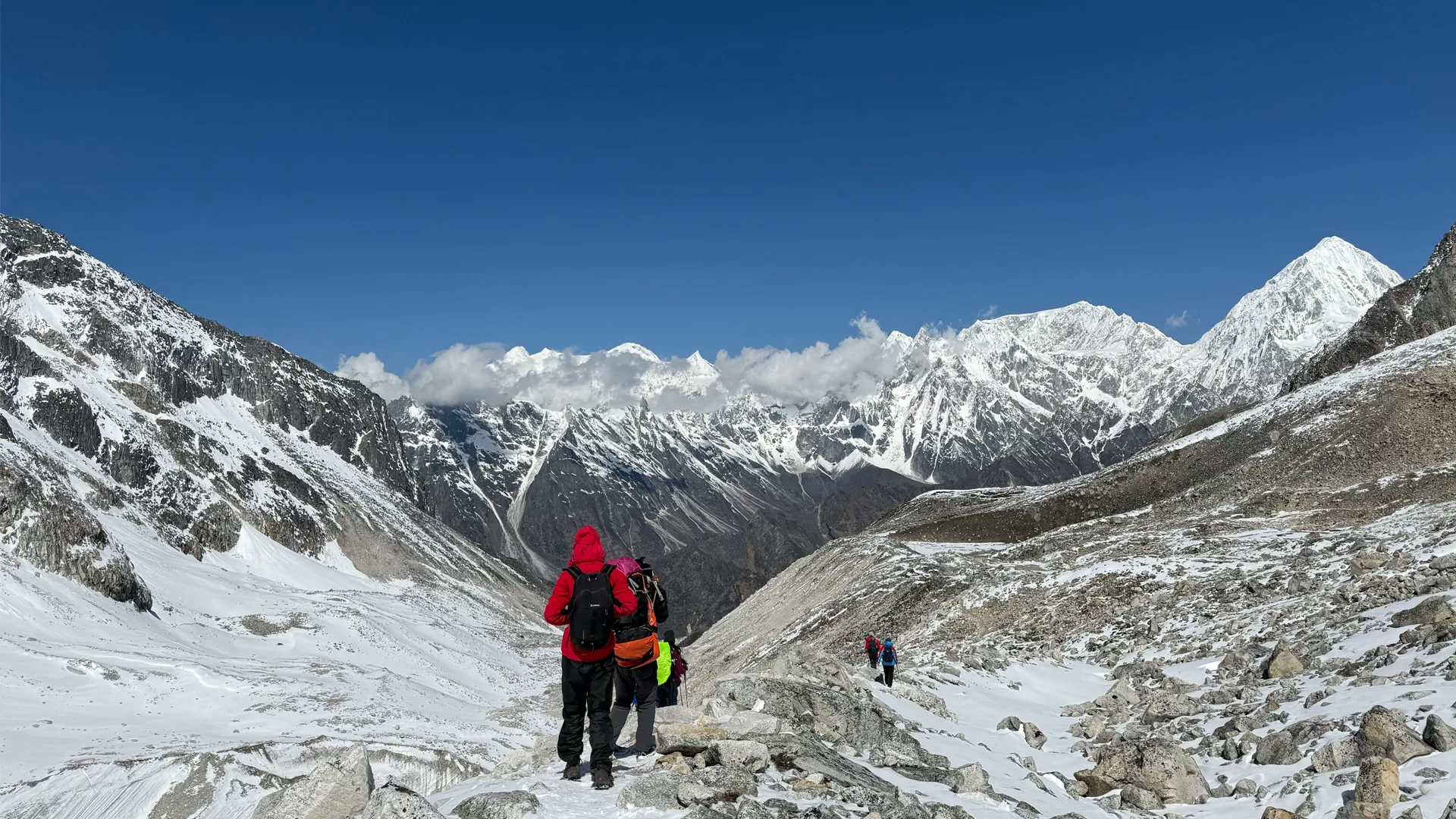
The Tsum Valley with Manaslu Larkya Pass trek stands as one of Nepal’s most spectacular and challenging Himalayan trekking adventures, combining the mystical sacred Tsum Valley with the thrilling Manaslu Circuit with Tsum Valley experience. This extraordinary Nepal restricted area trek offers adventurers an unparalleled journey through pristine alpine landscapes, ancient Tibetan Buddhist culture, and some of the most remote Himalayan villages in the world.
The Tsum Valley Manaslu trek uniquely blends cultural immersion with high-altitude adventure, taking trekkers through the pristine valley Nepal of Tsum before challenging them with the formidable Larkya La Pass at 5,160 meters. This high mountain pass crossing represents one of the most thrilling aspects of Himalayan trekking, offering breathtaking views of snow-capped peaks including Manaslu, the world’s eighth-highest mountain.
What makes the Tsum Manaslu trekking route truly special is its combination of spiritual discovery and physical challenge. The sacred Tsum Valley preserves centuries-old traditional Himalayan lifestyle and ancient monasteries Nepal, while the Manaslu Conservation Area protects diverse Himalayan wildlife including red panda and snow leopard habitat. This eco-friendly trekking Nepal experience allows visitors to witness the harmony between nature and culture that defines the Gorkha trekking region.
Where is Tsum Valley and Larkya La Pass?
The Tsum Valley Nepal lies hidden in the northern reaches of the Gorkha trekking region, nestled between the towering peaks of the Manaslu Conservation Area. This pristine valley Nepal sits at the confluence of the Budhi Gandaki River system, forming a natural sanctuary that has remained virtually unchanged for centuries.
Geographically, the Tsum Valley trek begins from the same starting point as the traditional Manaslu Circuit with Tsum Valley, following the Budhi Gandaki River valley northward from Soti Khola. The valley itself branches off from the main Tsum Manaslu trekking route at Lokpa, leading into the heart of this remote Himalayan villages region that borders Tibet.
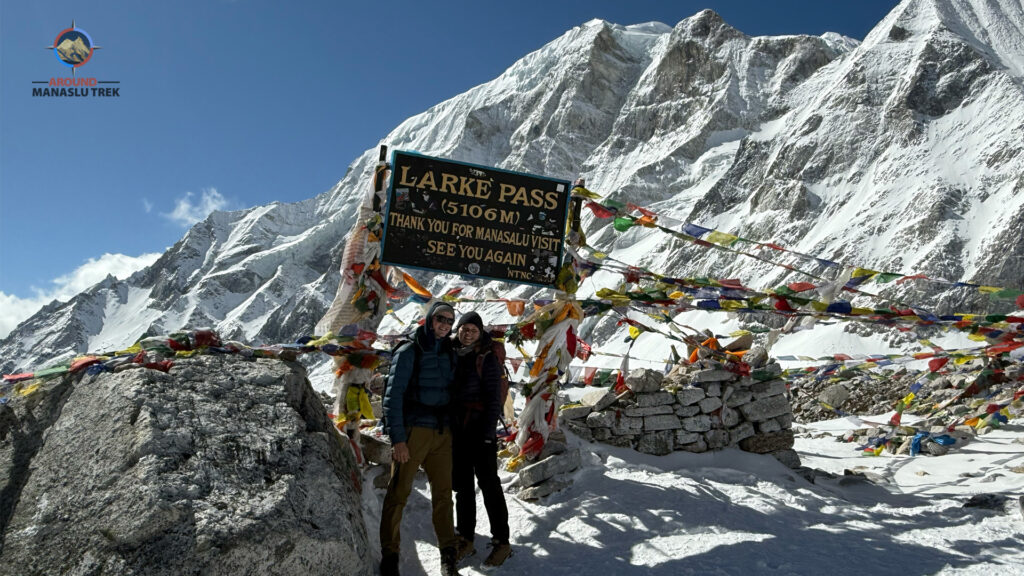
The Larkya La Pass serves as the dramatic finale of the Manaslu Larkya Pass trek, positioned at 5,160 meters above sea level. This high mountain pass connects the upper Budhi Gandaki River valley with the Marsyangdi valley, providing trekkers with one of the most spectacular crossing points in all of Himalayan trekking. The pass lies within the core zone of the Manaslu Conservation Area, surrounded by snow-capped peaks and alpine landscapes that showcase the raw beauty of the Himalayas.
The proximity to the Tibet border adds an extra dimension to the Nepal restricted area trek, as the sacred Tsum Valley shares cultural and religious ties with Tibetan Buddhist traditions. This unique positioning makes the Tsum Valley Manaslu trek a bridge between cultures, where Tibetan Buddhist culture flourishes in the shadow of Nepal’s highest peaks.
Highlights of the Tsum Valley with Manaslu Larkya Pass Trek
Hidden Tsum Valley – A Treasury of Tibetan Buddhist Culture
The sacred Tsum Valley represents one of Nepal’s last remaining strongholds of authentic Tibetan Buddhist culture. This hidden sanctuary within the Manaslu Conservation Area houses remarkable ancient monasteries Nepal including the revered Mu Gompa and Rachen Gompa. These spiritual centers have preserved centuries-old traditions, making the Tsum Valley trek a profound spiritual trekking in Nepal experience.
The valley’s crown jewel, Milarepa’s cave, holds immense significance for Buddhist pilgrims and trekkers alike. This sacred site, where the famous Tibetan yogi Milarepa meditated, adds a mystical dimension to the Tsum Manaslu trekking route. The Buddhist mani walls that line the trails create a spiritual pathway through this pristine valley Nepal, while the traditional Himalayan lifestyle of the local Gurung and Nubri culture communities offers authentic cultural encounters.
Crossing the Thrilling Larkya La Pass
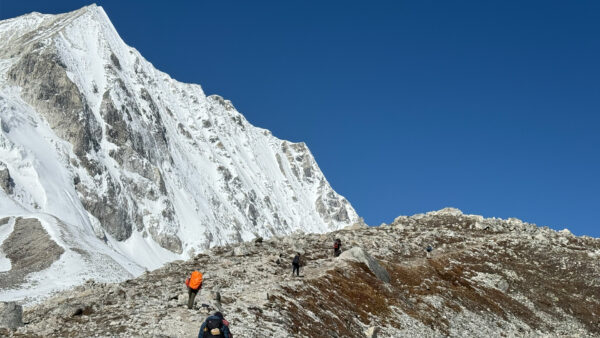
The Larkya La Pass crossing stands as the ultimate challenge of the Manaslu Larkya Pass trek. This high mountain pass at 5,160 meters tests trekkers’ endurance while rewarding them with unparalleled panoramic views. The ascent through alpine landscapes and the dramatic crossing make this high altitude trek Nepal an unforgettable adventure.
The difficulty level of Manaslu trek is significantly influenced by this pass crossing, requiring proper altitude sickness prevention strategies and excellent physical preparation. The rewards, however, are immeasurable as trekkers witness some of the most spectacular snow-capped peaks in the entire Himalayan range.
Majestic Mountain Views and Natural Wonders
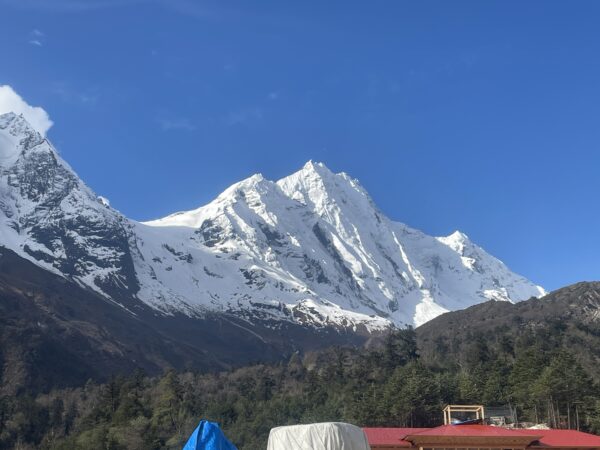
The Tsum Valley Manaslu trek offers unrivaled mountain vistas throughout the journey. The snow-capped peaks of Manaslu (8,163m), Ganesh Himal range, and Himalchuli create a magnificent backdrop for the entire Himalayan trekking experience. The alpine landscapes transition from subtropical rhododendron forests at lower elevations to high-altitude desert terrain near the Larkya La Pass.
The Manaslu Conservation Area protects an incredible diversity of Himalayan wildlife, including the endangered red panda and snow leopard habitat. The pristine valley Nepal environment of Tsum provides sanctuary for blue sheep, Himalayan thar, and over 200 bird species, making this eco-friendly trekking Nepal adventure a naturalist’s paradise.
Sacred Sites and Spiritual Encounters
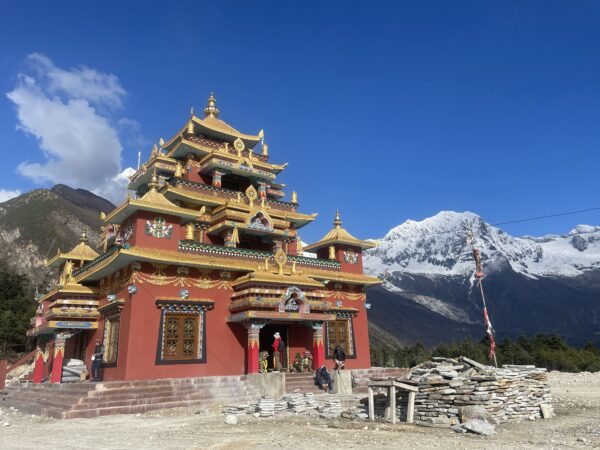
The spiritual trekking in Nepal aspect of this journey cannot be overstated. The Mu Gompa, perched dramatically at 3,700 meters, serves as the spiritual heart of the sacred Tsum Valley. The Rachen Gompa, known as the “White Monastery,” houses nuns who have dedicated their lives to Buddhist practice. These ancient monasteries Nepal provide trekkers with opportunities for meditation, prayer, and cultural exchange.
The Buddhist mani walls that stretch for kilometers through the valley create a sacred landscape where every stone has been carved with prayers and mantras. This integration of spirituality into the natural environment exemplifies the traditional Himalayan lifestyle that has flourished in these remote Himalayan villages for generations.
Trek Highlights
- Breathtaking views of Ganesh Himal, Sringi Himal, Boudha Himal, and Himalchuli.
- Exploration of the hidden land where Guru Rinpoche and Milarepa meditated in several sacred caves.
- Widely regarded as Nepal’s finest trek, offering stunning Himalayan scenery, including Mt. Manaslu (8,156m), the world’s eighth-highest peak.
- Crossing the spectacular Larkya La Pass (5,200m).
- A geographically and culturally enriching experience, with the Nupri inhabitants of the upper Budhi Gandaki Valley showcasing a lifestyle, language, and customs deeply rooted in Tibetan culture.
- Encounters with numerous Buddhist Mani walls, ancient monasteries, and picturesque villages with traditional architecture.
- Challenging, off-the-beaten-path routes to Manaslu Base Camp and Ganesh Himal Base Camp.
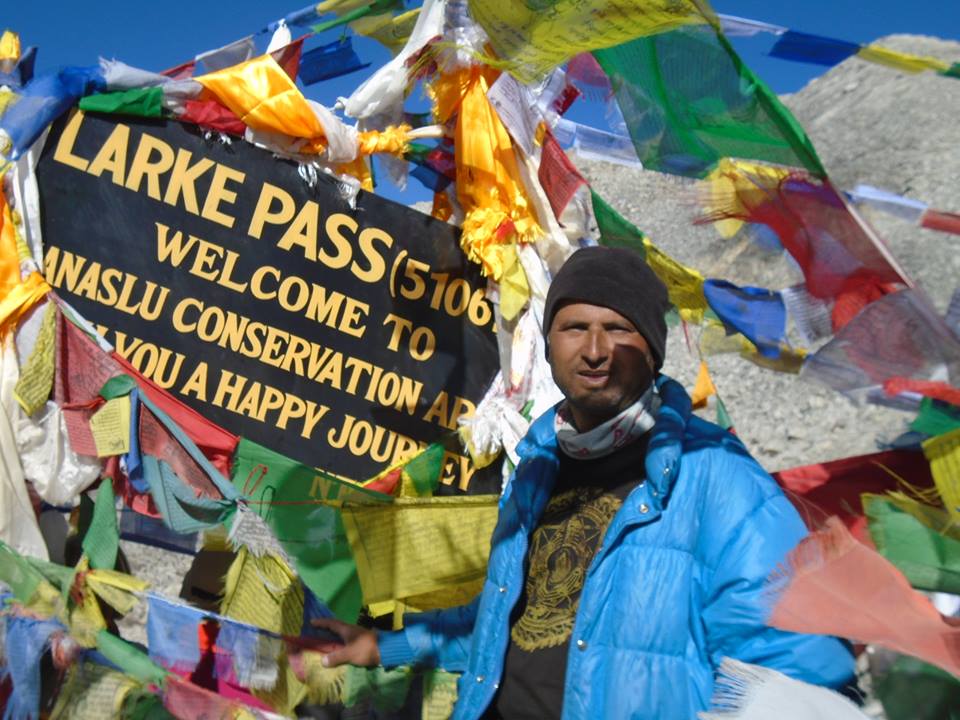
The trek passes through several ethnic inhabitants along with lush forest and array of mountain peaks. It starts following Budhi Gandaki river and ends in Besisahar, whereas it is the start point of Annapurna Circuit Trek. In an initial, it goes along lush green forest filled with mesmerizing waterfalls and a few suspension bridges. Trekkers need to show their special permits in a check point when they arrive at Jagat as it is the beginning point from where you enter to restricted area. It continues through bamboo, pine and flourished rhododendron forests, bounded by Ganesh Himal, Shringi Himal, Himalchuli and Manaslu. When trekkers approach to Chokhangparo from Chumling, the trek suddenly changes its landscapes and begins with an unreleased communities of Tibetan origin amidst the stunning mountain. During the trail, trekkers will enjoy full of ancient Buddhist monasteries and maniwalls, and then they will back to landscape again when they approach the high elevation.
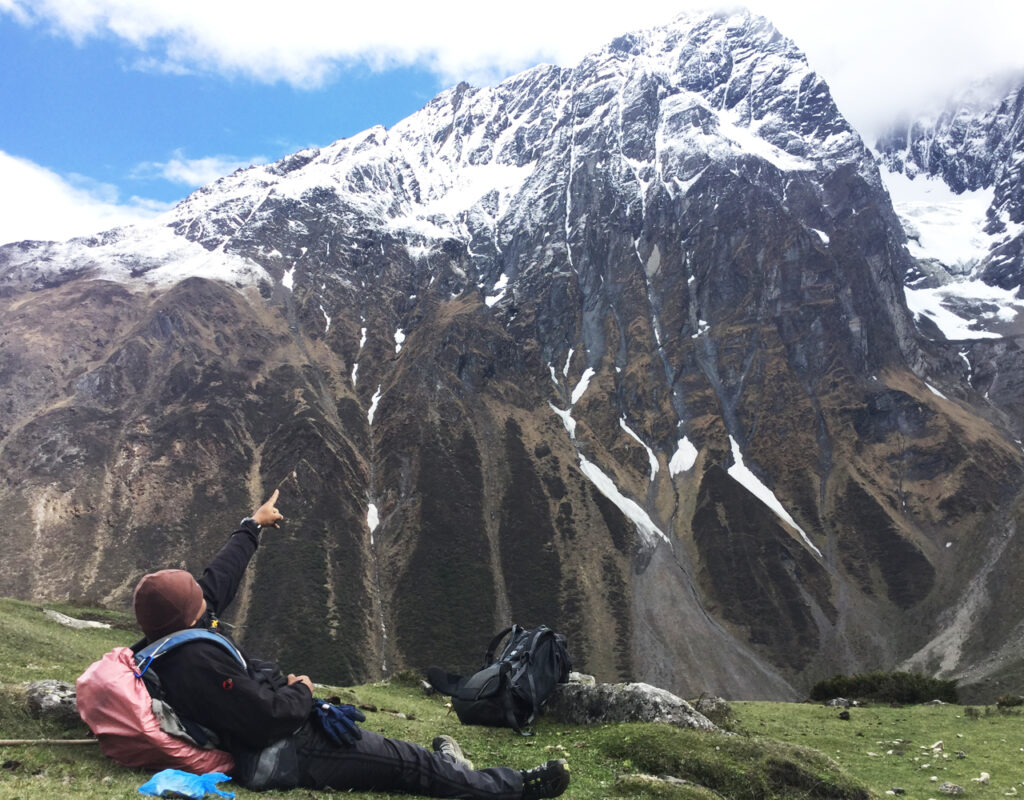
After you reach to Samagaon, you get a great opportunity of side trips as it is an acclimatization day; either you can go to Manaslu Base Camp or Pungen Gompa which is a less challenging hiking. Furthermore, you can hike to Tibetan border when you stay a night at Samdo. Tibetan border is so close from here, which is one of the main reason behind making of Manaslu a restricted area. You spend your last night at Dharmashala before achieving one of the highlight journey of the trek i.e crossing of Larkya Pass which is at 5160 m above the sea level. After crossing the pass, you will take downhill journey to Bhimtang, Tilije, Tal, and Syanje one after another with having the best accommodation. Finally, we will arrive at Besishahar and end the trek.
Outline Itinerary
Day 01: Drive from Kathmandu to Machha Khola (870m / 3,051 ft)
Day 02: Trek to Jagat (1,340m / 4,396 ft)
Day 03: Trek to Ekle Bhatti (1,600m / 5,249 ft)
Day 04: Trek to Chumling (2,386m / 7,828 ft)
Day 05: Trek to Chhekampar (3,031m / 9,944 ft)
Day 06: Trek to Mu Gompa (3,700m / 12,139 ft)
Day 07: Return to Chhekampar (3,031m / 9,944 ft)
Day 08: Trek to Lokpa (2,240m / 7,349 ft)
Day 09: Trek to Deng (1,860m / 6,102 ft)
Day 10: Trek to Ghap (2,250m / 7,382 ft)
Day 11: Trek to Lho Gaun (3,180m / 10,433 ft)
Day 12: Trek to Samagaon (3,530m / 11,581 ft)
Day 13: Acclimatization Day in Samagaon (3,530m / 11,581 ft)
Day 14: Trek to Samdo (3,875m / 12,713 ft)
Day 15: Acclimatization Day in Samdo (3,875m / 12,713 ft)
Day 16: Trek to Dharamsala (4,460m / 14,633 ft)
Day 17: Cross Larkya La Pass (5,106m / 16,752 ft) to Bhimtang (3,720m / 12,205 ft)
Day 18: Trek to Dharapani (1,963m / 6,440 ft)
Day 19: Drive back to Kathmandu via Besisahar.
Detailed Itinerary
Day 01: Drive from Kathmandu to Machha Khola (870m)
Your Himalayan adventure begins with a scenic drive out of bustling Kathmandu, passing through the peaceful countryside and traditional villages of Arughat and Soti Khola. After about 8–9 hours and 135 km of winding roads and lush hills, we reach Machha Khola—a quiet riverside village where your trekking journey begins. Overnight at a cozy teahouse, already feeling the rhythm of the mountains.
Day 02: Trek to Jagat (1,340m / 4,396 ft)
Today’s walk follows the beautiful Budhi Gandaki River, winding through forests, small settlements, and rice terraces. You’ll gradually leave behind the lowlands and begin to feel the wildness of the mountains. After around 6 hours of trekking (22 km), you reach Jagat, a charming stone-paved village and your entry point into the Manaslu Conservation Area.
Day 03: Trek to Eklebhatti (1,600m / 5,249 ft)
A shorter, gentler day (about 4 hours/15 km) allows for a relaxed pace as we climb steadily through dramatic gorges and remote landscapes. Along the way, you’ll pass suspension bridges, cascading waterfalls, and smiling locals, all adding to the richness of the journey.
Day 04: Trek to Chumling (2,386m / 7,828 ft)
Today marks a special transition—you enter the sacred Tsum Valley, a hidden gem of Tibetan Buddhist culture. As you ascend for about 6 hours (16 km), prayer flags flutter in the wind and mani walls guide the way. The village of Chumling offers your first real taste of Tibetan-influenced architecture, hospitality, and spirituality.
Day 05: Trek to Chhekampar(3,031m / 9,944 ft)
Climbing deeper into Tsum Valley, today’s 5-hour walk (10 km) leads to Chhekampar, one of the most culturally rich villages in the region. You’ll be surrounded by stunning views and warm-hearted locals from the Nubri and Tsum communities—keepers of centuries-old Himalayan traditions.
Day 06: Trek to Mu Gompa (3,700m / 12,139 ft)
This is a truly spiritual day—5 hours of trekking (16 km) brings you to Mu Gompa, the highest and most significant monastery in the Tsum Valley. With majestic snow-capped peaks all around, you’ll feel a deep sense of peace. The monastery, perched high on the hillside, offers insights into ancient Tibetan monastic life and breathtaking solitude.
Day 07: Return to Chhekampar (3,031m / 9,944 ft)
We retrace our steps, but the return journey allows us to absorb even more—perhaps a visit to Milarepa’s Cave, or simply soaking in the mystical vibe of the Tsum Valley. A 5-hour return walk lets you appreciate the terrain and culture from a new perspective.
Day 08: Trek to Lokpa (2,240m / 7,349 ft)
Descending for about 6 hours (14 km), we say goodbye to Tsum and rejoin the main Manaslu Circuit route. You’ll notice the landscapes changing again as we transition from sacred valleys to rugged trails leading toward high alpine territory.
Day 9: Trek to Deng (1,860m / 6,102 ft)
The journey continues along the Budhi Gandaki River with a steady 5-hour (12 km) hike to Deng. The scenery becomes more dramatic with deep gorges and forested paths, as you settle into the rhythm of trekking life.
Day 10: Trek to Ghap (2,250m / 7,382 ft)
You’ll climb gently through pine forests and quaint hamlets for about 5 hours (11 km), keeping your eyes open for Himalayan wildlife such as langurs or Himalayan thar. Ghap is a small but peaceful stop, perfect for reconnecting with nature.
Day 11: Trek to Lho Gaun (3,180m / 10,433 ft)
This 6-hour (16 km) trek is a beautiful and energizing climb to Lho—a village famous for its spectacular views of Manaslu and its charming monastery. The elevation brings cooler air and clearer mountain panoramas. It’s a perfect place to acclimatize and take photos!
Day 12: Trek to Samagaon (3,530m / 11,581 ft)
A short but meaningful walk (3 hours/13 km) brings us to Samagaon, a major stop before the Larkya La Pass. It’s a great place to rest, reflect, and prepare for the higher altitudes ahead.
Day 13: Acclimatization Day in Samagaon (3,530m / 11,581 ft)
Rest day doesn’t mean doing nothing! You can hike up to Manaslu Base Camp or visit Pungyen Gompa for jaw-dropping mountain views and spiritual moments. This day helps your body adjust while feeding your soul.
Day 14: Trek to Samdo (3,875m / 12,713 ft)
We continue upward with a 4-hour trek (8 km) to Samdo, the last permanent settlement before the high-altitude wilderness. Surrounded by towering peaks and yak pastures, Samdo feels like the edge of the world.
Day 15: Acclimatization Day in Samdo (3,875m / 12,713 ft)
Another well-deserved rest day includes optional hikes toward the Tibetan border. This extra day ensures you’re well-prepared for the big climb over the Larkya La Pass. Take in the silence, meet locals, and enjoy your final tea-house comforts.
Day 16: Trek to Dharmasala (4,460m / 14,633 ft)
A shorter but important day (4 hours/7 km) as we ascend to Dharmasala, the final resting point before the big pass. The air is thin, the landscape stark, and the excitement builds. You’ll sleep early and rise before dawn for the next day’s adventure.
Day 17: Cross Larkya La Pass (5,106m / 16,752 ft) to Bhimtang (3,720m / 12,205 ft)
This is the most challenging—and most rewarding—day of the trek. You’ll start early to cross the majestic Larkya La Pass, a tough but unforgettable 8-hour hike (18 km) across snow and stone. The panoramic views from the top are a surreal reward before descending to Bhimtang, a quiet village nestled beneath towering peaks.
Day 18: Trek to Dharapani (1,963m / 6,440 ft)
Your legs will welcome the descent today as you pass through rhododendron forests and tranquil meadows during this 5-hour (16 km) trek. As you descend, the warmth and greenery return—along with a great sense of accomplishment.
Day 19: Drive back to Kathmandu via Besisahar
It’s time to return to the city. A long but scenic drive (8–9 hours, approx. 190 km) takes you through Besisahar and back to Kathmandu. You’ll bring back more than just memories—you’ll carry the spirit of the Himalayas with you.
Price Includes
- 3 times (Full board) meal per day during the trek
- Seasonal Fruits
- Tea house accommodation during the trek (twin shared accommodation)
- All land transportation as per itinerary (Kathmandu to Machha Khola and Dharapani to Kathmandu by local bus)
- A professional government licensed trekking guide
- All required permits (Restricted area permit, TIMS, Manaslu Conservation Area Permit, and Annapurna Conservation Area Permit)
- Travel and rescue arrangements only
- Duffel bag to carry your equipment and trekking map
- All necessary paper works
- Farewell dinner
- Basic medical kit
- All government and local taxes
Add-ons
- A porter (A porter can carry up to 15 – 20 kg – 1 porter for 2 trekkers) – Total cost USD 475
- Private jeep (Kathmandu to Machha Khola drive and Dharapani to Kathmandu) – Total cost USD 440
- All airport-hotel transfers
- Boutique hotel accommodation in Kathmandu with breakfast included (Optional:4-star hotel)
Price doesn’t Include
- International airfares
- Lunch and Dinner in Kathmandu
- Tips for guide and porter
- All additional costs (such as beverages, shopping, etc)
- Travel and rescue insurance
- All the things not mentioned in the inclusion
Route Map of Manaslu Circuit and Tsum Valley Trek
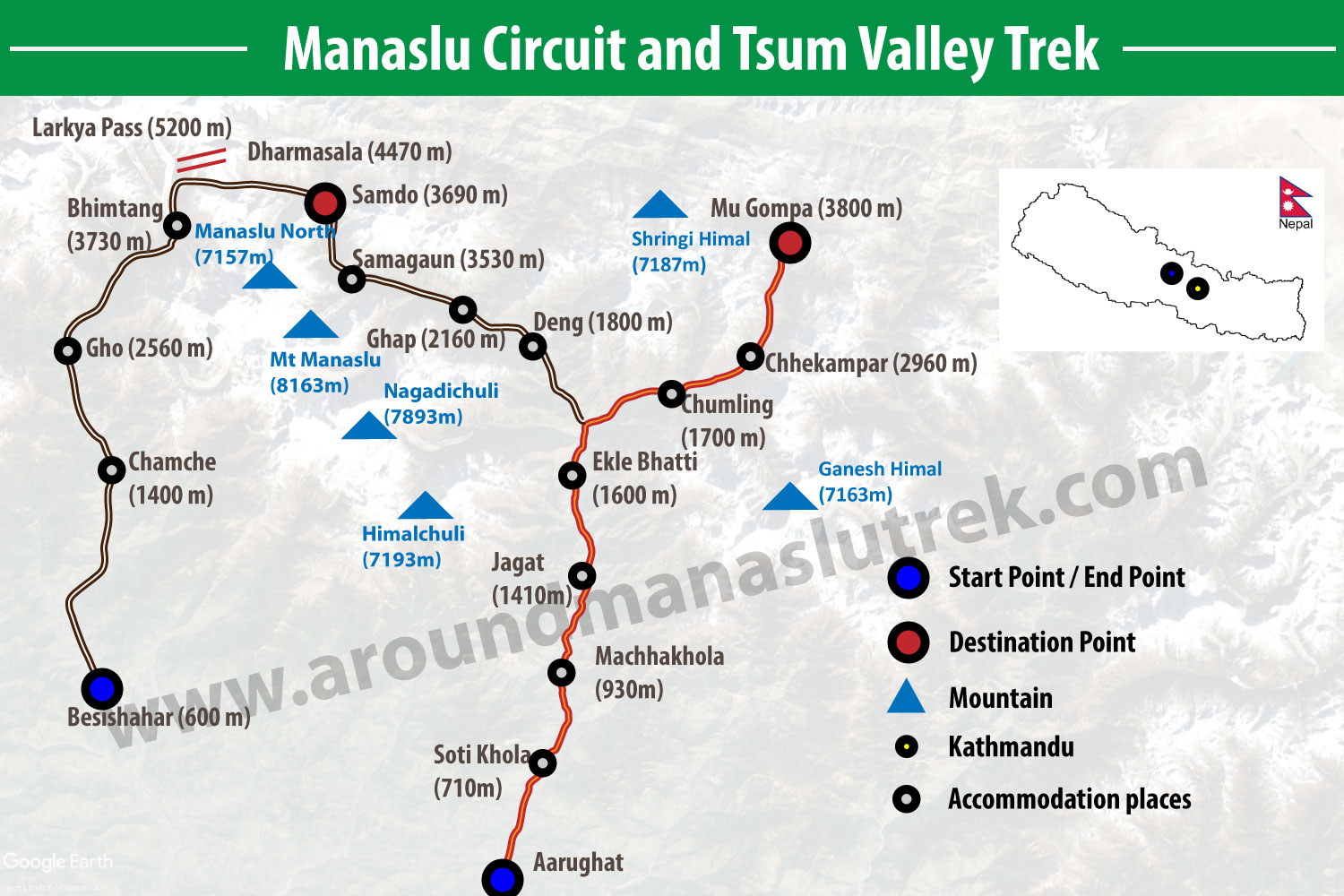
The above map shows a collective information about Manaslu circuit with tsum valley trek. As shown in above map, this trek starts from Aarughat, then passes through several gigantic mountains and poetic Buddhist ethnicity. It crosses one of the highest pass of the Himalaya, called as Larkya Pass and finally ends reaching at Besishahar.
Note: There is not possible to include all attractions and places in a single map. So this map is only a tiny sight of this trek.
Trek Difficulty and Physical Preparation
The difficulty level of Manaslu trek combined with the Tsum Valley trek is classified as strenuous, requiring excellent physical fitness and mental preparation. This high altitude trek Nepal presents multiple challenges that demand respect and thorough preparation.
Altitude Challenges and Acclimatization
The Larkya La Pass at 5,160 meters represents the highest point of the trek, making altitude sickness prevention a critical consideration. The gradual ascent through the sacred Tsum Valley provides excellent acclimatization opportunities, but trekkers must still be vigilant about symptoms and prepared for the high mountain pass crossing.
The Tsum Valley trek itinerary includes multiple acclimatization days, particularly important given the extended time spent above 3,000 meters. The pristine valley Nepal environment of Tsum, with villages like Chhokangparo at 3,010 meters, provides ideal settings for gradual altitude adjustment.
Physical Fitness Requirements
This Nepal restricted area trek demands excellent cardiovascular fitness, strong leg muscles, and mental resilience. The combination of long daily hiking distances, significant elevation gains, and challenging terrain makes the Tsum Valley Manaslu trek suitable only for experienced trekkers or those who have completed thorough preparation.
Training Recommendations
Prospective trekkers should engage in a comprehensive training program including cardiovascular exercises, strength training, and practice hikes with a loaded backpack. The eco-friendly trekking Nepal philosophy encourages trekkers to be self-sufficient and minimize their environmental impact, requiring good physical condition to carry personal gear.
Who Can Undertake This Trek
The Manaslu Larkya Pass trek suits experienced trekkers who have completed other major Himalayan trekking routes. Previous high-altitude experience, such as trekking in the Gorkha trekking region or other areas above 4,000 meters, provides valuable preparation for this challenging adventure.
Permits and Regulations
The Nepal restricted area trek status of both the Tsum Valley trek and Manaslu Circuit with Tsum Valley requires multiple permits and strict adherence to regulations. These requirements ensure the preservation of the sacred Tsum Valley and Manaslu Conservation Area while providing sustainable tourism benefits to remote Himalayan villages.
Required Permits
- Tsum Valley Permit: This special permit allows access to the pristine valley Nepal of Tsum and costs $40 per person for the first seven days, with additional days charged at $7 each. The permit specifically covers the sacred Tsum Valley region and its ancient monasteries Nepal.
- Manaslu RAP (Restricted Area Permit): Required for the Manaslu Larkya Pass trek portion, this permit costs $100 per person for the first seven days (September-November) or $75 (December-August), with subsequent days at $15 each.
- MCAP (Manaslu Conservation Area Permit): This environmental permit costs $30 per person and supports conservation efforts in the Manaslu Conservation Area, protecting Himalayan wildlife and red panda and snow leopard habitat.
- ACAP (Annapurna Conservation Area Permit): Required for the final section of the trek, costing $20 per person for the portion that connects with the Annapurna Circuit.
Mandatory Guide Requirements
The trekking guide for Manaslu and Tsum Valley is mandatory for all visitors to this Nepal restricted area trek. This regulation ensures trekker safety while supporting local employment and preserving Tibetan Buddhist culture through knowledgeable interpretation.
Group Size Regulations
A minimum of two trekkers is required for permits, though solo travelers can utilize a “ghost permit” system. This regulation maintains the eco-friendly trekking Nepal principles while ensuring adequate support for trekkers in these remote Himalayan villages.
Permit Processing
All trekking permit Nepal applications must be processed through registered trekking agencies in Kathmandu. The complex permit requirements for the Tsum Manaslu trekking route make professional handling essential for smooth processing and compliance with regulations.
Best Time to Trek
The best time for Manaslu trek combined with the Tsum Valley trek depends on weather patterns, visibility, and seasonal conditions that affect both the sacred Tsum Valley and the challenging Larkya La Pass crossing.
Spring Season (March-May)
Spring represents the best time for Tsum Valley Manaslu trek for many trekkers, offering stable weather and spectacular rhododendron forests displays. The Tsum Valley and Manaslu trek in spring provides excellent visibility of snow-capped peaks and comfortable temperatures in the pristine valley Nepal.
During spring, the alpine landscapes come alive with blooming flowers, and the Himalayan wildlife becomes more active. The Buddhist mani walls and ancient monasteries Nepal appear particularly beautiful against the backdrop of blooming vegetation and clear mountain views.
Autumn Season (September-November)
Autumn offers the most reliable weather for the Manaslu Larkya Pass trek, with crystal-clear mountain views and stable conditions for crossing the high mountain pass. This season provides optimal conditions for high altitude trek Nepal adventures, with minimal precipitation and excellent visibility.
The Tibetan Buddhist culture celebrations and festivals during autumn add cultural richness to the spiritual trekking in Nepal experience. The traditional Himalayan lifestyle in remote Himalayan villages is particularly vibrant during harvest season.
Weather Considerations
The Larkya La Pass can be dangerous during monsoon (June-August) and winter (December-February) seasons. The high mountain pass experiences severe weather conditions that make crossing extremely hazardous, while heavy snowfall can block access to the sacred Tsum Valley.
Seasonal Wildlife Viewing
The red panda and snow leopard habitat in the Manaslu Conservation Area offers different viewing opportunities throughout the year. Spring and autumn provide the best chances for wildlife encounters while maintaining safe trekking conditions.
Culture and People of Tsum and Manaslu
The Tibetan Buddhist culture of the sacred Tsum Valley and surrounding Manaslu Conservation Area represents one of the most authentic preservation of traditional Himalayan civilization. The Gurung and Nubri culture communities have maintained their traditional Himalayan lifestyle for centuries in these remote Himalayan villages.
The Tsumba People
The inhabitants of the Tsum Valley Nepal are known as Tsumba people, who practice a pure form of Tibetan Buddhist culture that has remained largely unchanged for generations. These resilient communities have adapted to life in the pristine valley Nepal while maintaining their spiritual practices and cultural traditions.
The Tsumba people’s traditional Himalayan lifestyle revolves around agriculture, animal husbandry, and trade with Tibet. Their unique polyandrous marriage system and communal decision-making processes reflect ancient social structures that continue to function in these remote Himalayan villages.
Buddhist Lifestyle and Spiritual Practices
The spiritual trekking in Nepal experience in the sacred Tsum Valley reveals a society where Buddhism permeates every aspect of daily life. The ancient monasteries Nepal including Mu Gompa and Rachen Gompa serve as centers of learning, meditation, and community gathering.
The Buddhist mani walls that stretch throughout the valley represent centuries of devotional practice, with each carved stone contributing to the spiritual landscape. The Milarepa’s cave holds special significance as a pilgrimage site where the famous Tibetan yogi achieved enlightenment.
Nubri Culture in the Manaslu Region
The Gurung and Nubri culture of the Manaslu Conservation Area exhibits strong Tibetan influences while maintaining distinct local characteristics. These communities practice a blend of Buddhism and Bon religion, creating unique cultural expressions in their festivals, architecture, and daily practices.
Monasteries and Spiritual Centers
The Mu Gompa, situated at 3,700 meters, stands as the highest and most significant monastery in the Tsum Valley trek region. This ancient monasteries Nepal facility houses precious artifacts, ancient texts, and provides education for local children.
The Rachen Gompa, known for its community of Buddhist nuns, offers visitors insight into female monasticism in Tibetan Buddhist culture. These spiritual centers play crucial roles in preserving traditional knowledge and practices in the pristine valley Nepal.
Cultural Preservation and Modern Challenges
The traditional Himalayan lifestyle faces challenges from modernization and climate change, making cultural preservation efforts crucial. The eco-friendly trekking Nepal initiatives help support local communities while encouraging the maintenance of traditional practices.
Food and Accommodation
The tea house trekking Nepal experience along the Tsum Valley Manaslu trek offers authentic cultural immersion through local hospitality and traditional cuisine. The accommodation and dining facilities in the sacred Tsum Valley and Manaslu Conservation Area reflect the traditional Himalayan lifestyle while providing necessary comfort for trekkers.
Tea House Experience in Tsum Valley
The sacred Tsum Valley tea houses provide basic but comfortable accommodation, often run by local families who embody the Tibetan Buddhist culture of the region. These establishments offer intimate glimpses into the traditional Himalayan lifestyle while supporting the economies of remote Himalayan villages.
Traditional Himalayan Cuisine
The meals along the Tsum Manaslu trekking route feature traditional dishes that reflect both Gurung and Nubri culture influences. Dal bhat (rice and lentils) remains the staple, often accompanied by local vegetables, yak meat, and traditional Tibetan bread.
The pristine valley Nepal environment of Tsum produces unique ingredients including high-altitude barley, buckwheat, and various medicinal herbs used in traditional cooking. These ingredients create distinctive flavors that enhance the spiritual trekking in Nepal experience.
Accommodation Standards
The tea house trekking Nepal facilities in the Manaslu Conservation Area range from basic lodges to more comfortable establishments, depending on location and altitude. The remote Himalayan villages along the route provide authentic experiences where comfort comes secondary to cultural immersion.
Meal Planning and Dietary Considerations
The Tsum Valley trek itinerary requires careful meal planning, especially considering the limited food options in higher-altitude areas near the Larkya La Pass. The eco-friendly trekking Nepal philosophy encourages minimizing food waste and supporting local food systems.
Packing List & Trekking Gear
The high altitude trek Nepal demands of the Manaslu Larkya Pass trek require comprehensive gear selection for safety and comfort across diverse alpine landscapes and challenging high mountain pass conditions.
Essential Clothing Systems
Layering systems prove crucial for the varying conditions from subtropical rhododendron forests to the arctic environment of Larkya La Pass. High-quality down jackets, insulated pants, and waterproof outer shells provide protection against the extreme weather conditions common in the Manaslu Conservation Area.
High-Altitude Specific Gear
The difficulty level of Manaslu trek necessitates specialized equipment including high-altitude sleeping bags rated to -20°C, insulated sleeping pads, and quality mountaineering boots suitable for the high mountain pass crossing.
Navigation and Safety Equipment
GPS devices, detailed maps of the Tsum Manaslu trekking route, and emergency communication devices ensure safety in the remote Himalayan villages where rescue operations can be challenging.
Water Purification and Hydration
The pristine valley Nepal environment requires reliable water purification systems to maintain health throughout the spiritual trekking in Nepal journey. Quality water filters and purification tablets prove essential in areas where bottled water may not be available.
Photography and Documentation Gear
The spectacular snow-capped peaks, ancient monasteries Nepal, and Tibetan Buddhist culture warrant quality photography equipment protected against extreme conditions and altitude effects.
Eco-Tourism and Responsible Travel Tips
The eco-friendly trekking Nepal principles become particularly important in the fragile ecosystems of the sacred Tsum Valley and Manaslu Conservation Area, where Himalayan wildlife and traditional Himalayan lifestyle require protection and preservation.
Supporting Local Communities
The Nepal restricted area trek status of this route provides opportunities to directly support remote Himalayan villages through responsible tourism practices. Purchasing local products, hiring local guides, and staying in community-run tea houses ensures tourism benefits reach the Gurung and Nubri culture communities.
Wildlife Conservation
The red panda and snow leopard habitat within the Manaslu Conservation Area requires careful protection from human impact. Maintaining appropriate distances from wildlife, avoiding loud noises, and following designated trails help preserve these endangered species’ environments.
Waste Management
The pristine valley Nepal environment demands strict Leave No Trace practices, particularly challenging given the length of the Tsum Valley trek itinerary. All non-biodegradable waste must be carried out, and organic waste should be disposed of properly to maintain the purity of water sources like the Budhi Gandaki River.
Cultural Sensitivity
Respecting Tibetan Buddhist culture requires understanding and following local customs, particularly around ancient monasteries Nepal like Mu Gompa and Rachen Gompa. Photography restrictions, appropriate dress codes, and respectful behavior around Buddhist mani walls and sacred sites preserve the spiritual atmosphere of the sacred Tsum Valley.
Environmental Impact Minimization
The high altitude trek Nepal environment proves particularly fragile, requiring careful consideration of fuel consumption, trail erosion, and ecosystem disruption. Using established campsites, following designated trails, and minimizing group sizes help preserve the alpine landscapes for future generations.
For those ready to undertake this high altitude trek Nepal, proper preparation, respect for local customs, and commitment to responsible travel practices ensure a rewarding experience that honors both the natural environment and the Tibetan Buddhist culture that makes this region truly special.
Tip: If you prefer to skip the Tsum Valley Trek and do only the Manaslu Circuit Trek, our 15-day Manaslu Circuit Trek may be a better option for you.
FAQs
General Information
1. What is special about the Manaslu Tsum Valley Trek?
The Manaslu Tsum Valley Trek offers a unique opportunity to break away from daily routines and fully immerse yourself in the natural beauty surrounding the 8th highest peak in the world, Mt. Manaslu. This trek also provides a deep cultural exploration of the hidden Tsum Valley, which has captivated visitors with its diverse landscapes and rich Tibetan-influenced traditions. Despite being relatively new to the trekking world, Tsum Valley has quickly gained recognition for its stunning topography and vibrant cultural heritage.
2. What makes this trek different from other Nepal treks?
It uniquely combines spiritual and cultural immersion in the sacred Tsum Valley with the high-altitude adventure of the Manaslu Circuit. Ancient monasteries and untouched landscapes set it apart.
3. Is this trek crowded?
The sacred Tsum Valley and Manaslu Larkya Pass trek remain significantly less crowded than popular routes like Everest Base Camp or Annapurna Circuit. The Nepal restricted area trek status and permit requirements limit numbers, preserving the pristine nature of these remote Himalayan villages.
4. How difficult is the Manaslu Tsum Valley Trek?
It’s considered challenging, involving daily walks of 6–7 hours over rugged terrain and high altitudes. Good fitness and preparation are essential.
Requirements & Permits
1. Can solo trekkers do this trek?
Nepal’s restricted area regulations require at least two trekkers for permits. However, solo travelers can use a “ghost permit” system. A licensed trekking guide is mandatory for the Tsum Valley section to ensure safety and compliance.
2. Why do we need a guide and porter for the trek?
A licensed guide is essential for navigating the trek and providing insights into the local culture and geography. A porter can enhance your comfort by carrying your gear, allowing you to focus on enjoying the trek. Both guide and porter contribute significantly to the overall trekking experience.
Best Time, Cost & Transportation
1. When is the best time for the Tsum Valley Manaslu trek?
The Manaslu Tsum Valley Trek is best undertaken in the spring and autumn. These seasons offer clear weather and stunning scenery, with autumn providing vibrant festival experiences and spring showcasing blooming rhododendrons. Winter is not recommended due to extreme cold and potential snowfall, which can lead to trail blockades.
2. How much does the Tsum Valley and Manaslu trek cost?
The Manaslu Tsum Valley Trek is more expensive compared to other treks in Nepal due to its length and the requirement for two special permits. The budget typically ranges from USD 1,500 to USD 3,500, depending on the level of services and accommodations you choose. This range accounts for the various options available to suit different preferences and needs.
3. How do I arrange transportation?
Transportation to the Tsum Manaslu trekking route starting point typically involves a drive from Kathmandu to Soti Khola. Most Nepal trekking package 2025 offerings include transportation arrangements as part of comprehensive service packages.
Safety & Health
1. Are there risks of altitude sickness?
Yes, especially at Larkya La Pass (5,160m). Gradual ascent, proper acclimatization, and staying hydrated are key prevention strategies.
2. Is the trek safe after the 2015 earthquake?
Yes, it is safe to trek the Manaslu Tsum Valley. The trails have been fully repaired and are now safe for trekkers following the earthquake recovery and reconstruction efforts. While some locals are still rebuilding their lives, the trekking routes are well-maintained and secure.
3. Are there hospitals or medical facilities along the trek?
Basic medical facilities are available at several health posts along the trek. However, it is advisable to carry your own regular medications. For more serious conditions, medical evacuation may be necessary.
4. What happens in case of an emergency during the trek?
In the event of an emergency, experienced and knowledgeable trekking staff and guides will assist you. They are familiar with the local terrain and risks and will coordinate with your trekking agency to provide the best possible support and guidance.
5. Is the water safe to drink?
The water along the trek is sourced from rural facilities such as taps, wells, and hand pumps. It is crucial to purify this water before drinking, either by using bottled water, purification tablets, or other water treatment methods to ensure safety.
Accommodation
1. What food and accommodations can we expect?
During the trek, you will stay in tea houses, lodges, and tent camps. Meals typically include traditional Nepali dishes like Dal-Bhat, along with other local fare. Accommodations are basic but comfortable, providing a traditional trekking experience.
2. Is hot shower available during the trek?
Yes, but limited. Hot showers are usually available in lower villages for an extra fee. As you go higher, showers become rare or may be replaced with bucket showers using heated water.
3. Is Wi-Fi or mobile network available in lodges?
Some teahouses offer Wi-Fi (often paid), but it can be slow or unstable. Mobile network coverage is limited and unreliable, especially beyond Namrung and Lho.
4. How clean are the teahouses?
Cleanliness varies by location. Lower villages generally have better-maintained lodges, while higher areas are more basic. Still, most teahouses maintain reasonable hygiene considering the remote setting.
Conclusion
The Tsum Valley with Manaslu Larkya Pass trek represents the pinnacle of Himalayan trekking adventures, combining the spiritual richness of the sacred Tsum Valley with the physical challenge of crossing the formidable Larkya La Pass. This extraordinary Nepal restricted area trek offers a life-changing journey through some of the world’s most pristine and culturally significant mountain landscapes.
The Tsum Valley Manaslu trek provides an unmatched opportunity to experience authentic Tibetan Buddhist culture while challenging oneself against the backdrop of magnificent snow-capped peaks. The pristine valley Nepal of Tsum preserves centuries-old traditions in remote Himalayan villages, while the Manaslu Conservation Area protects incredible biodiversity including red panda and snow leopard habitat.
This spiritual trekking in Nepal adventure suits experienced trekkers seeking profound cultural immersion combined with serious physical challenge. The traditional Himalayan lifestyle encountered in communities practicing Gurung and Nubri culture provides authentic insights into mountain civilizations that have thrived for generations in these alpine landscapes.
The eco-friendly trekking Nepal approach ensures that this remarkable journey contributes positively to local communities while preserving the natural and cultural heritage of the region. From the ancient monasteries Nepal like Mu Gompa and Rachen Gompa to the dramatic crossing of the high mountain pass, every aspect of this trek creates lasting memories and personal transformation.