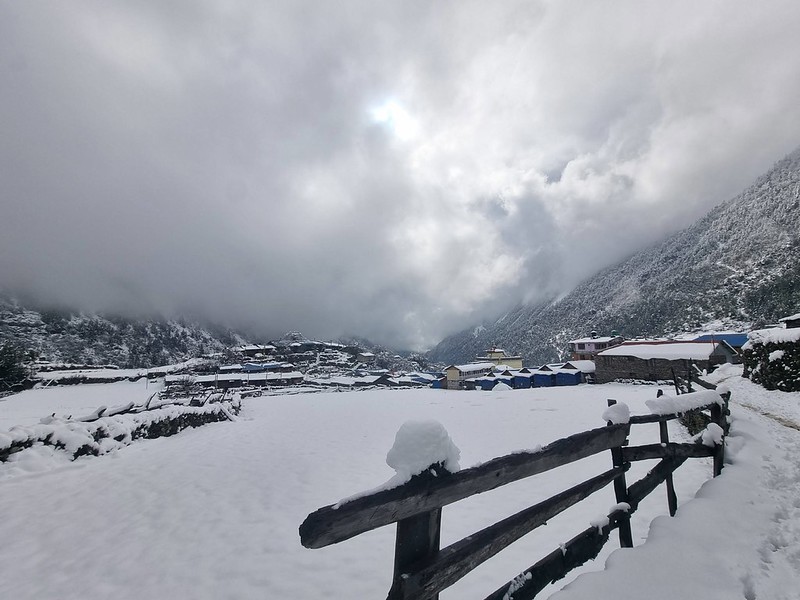
Samagaun Village is far more than a place to rest your legs on the Manaslu Circuit Trek. It is the heart of the whole journey. Tucked right beneath Mount Manaslu, this old Himalayan village is where you slow down, let your body get used to the altitude and get a real taste of life in the Nubri Valley.
At 3,530 meters (11,581 feet), it is the biggest village on the circuit. Most trekkers spend two nights here before heading on to Samdo and the tough Larkya La Pass. Stone houses, flapping prayer flags, centuries-old monasteries and friendly local families make it a stop you won’t forget.
Below you’ll find everything you need to plan your stay: where the village is, how to get there, what to do, where to sleep, when to go, which permits you need and how to stay safe at altitude.
Where Is Samagaun Village?
Samagaun sits in the Nubri Valley of Gorkha District, inside the Manaslu Conservation Area. The village lies in the upper Budhi Gandaki Valley, ringed by snow peaks, glaciers and alpine forest, with Mount Manaslu (8,163 m), the world’s eighth-highest mountain, rising right above it.
By the time you get here, you will have crossed swinging suspension bridges, walked through thick forest and passed villages that carry both Gurung and Tibetan influence. Around Samagaun, the scenery opens up into a wide valley of glacial rivers, yak pastures and rugged slopes. Because the village faces south, it gets lots of sun during the day.
Smaller settlements further along the trail have very little to offer. Samagaun has plenty of teahouses, a few bakeries, small shops and several monasteries, which makes it the easiest place on the route to take an extra day off.
Samagaun Altitude at a Glance
| Detail | Information |
|---|---|
| Elevation | 3,530 m (11,581 ft) |
| Region | Nubri Valley, Manaslu Conservation Area |
| Lho (3,180 m) to Samagaun | About 7 km, roughly 3–5 hours |
| Samagaun to Samdo (3,860 m) | About 8 km, roughly 3–4 hours |
| Highest point on the trek | Larkya La Pass, 5,106 m |
How long each walk takes depends on your pace and how often you stop for photos and tea.
How to Get to Samagaun
There’s no road to Samagaun. You reach it on foot along the Manaslu Circuit route, starting from Kathmandu.
- Kathmandu to Soti Khola or Machha Khola: an 8–9 hour drive to the start of the trek.
- Jagat, Deng, Namrung and Lho: you climb slowly through warm forest, terraced fields and alpine meadows.
- Lho to Samagaun: the last stretch crosses high pastures, and the mountain views get better with every step.
All in all, it takes about 6 to 7 days of walking from the roadhead. The climb is gradual, so your body has time to adjust as you go.
The People and Culture of Samagaun Village
The villagers are Nubri people, whose ancestors came from Tibet many centuries ago. They still share trade and cultural ties with Tibet. Their houses have thick stone walls and flat roofs made to carry heavy snow.
Buddhism is part of daily life. There are three main monasteries here, and Pungyen Gompa is the biggest and most visited. During Losar, the Tibetan New Year, new prayer flags go up on the houses, and many older villagers walk a kora, a clockwise circuit around sacred places, every morning.
Before trekkers started arriving in the 1990s, families lived on farming and herding. Many still keep yaks for milk, wool and carrying loads, and grow barley and potatoes in the short summer. Today most households earn their main income from running lodges.
Simple Etiquette to Follow
- Take your shoes off before entering a monastery, and ask before taking photos.
- Walk clockwise around mani walls, stupas and prayer wheels.
- Don’t step over or play with prayer flags. They stand for the five elements: earth, water, fire, air and space.
- Greet people with a friendly “Namaste” or “Tashi Delek”. It goes a long way.
Monks often bless respectful visitors, and your visit helps support the local community.
Why You Should Stop at Samagaun
- A perfect place to acclimatize: you can adjust to the height before going higher.
- Close views of Manaslu: the south face and glacier are visible right from the village.
- Living Tibetan Buddhist culture: stone houses, mani walls, prayer wheels and old gompas.
- Great side hikes: Manaslu Base Camp, Birendra Lake and Pungyen Gompa all begin here.
- Real facilities: teahouses, a health post and a helicopter landing area.
Top Things to Do in Samagaun
Most trekkers spend two nights here, so you get a whole free day to explore. A guide who knows the area makes these hikes safer and a lot more enjoyable.
Manaslu Base Camp Hike
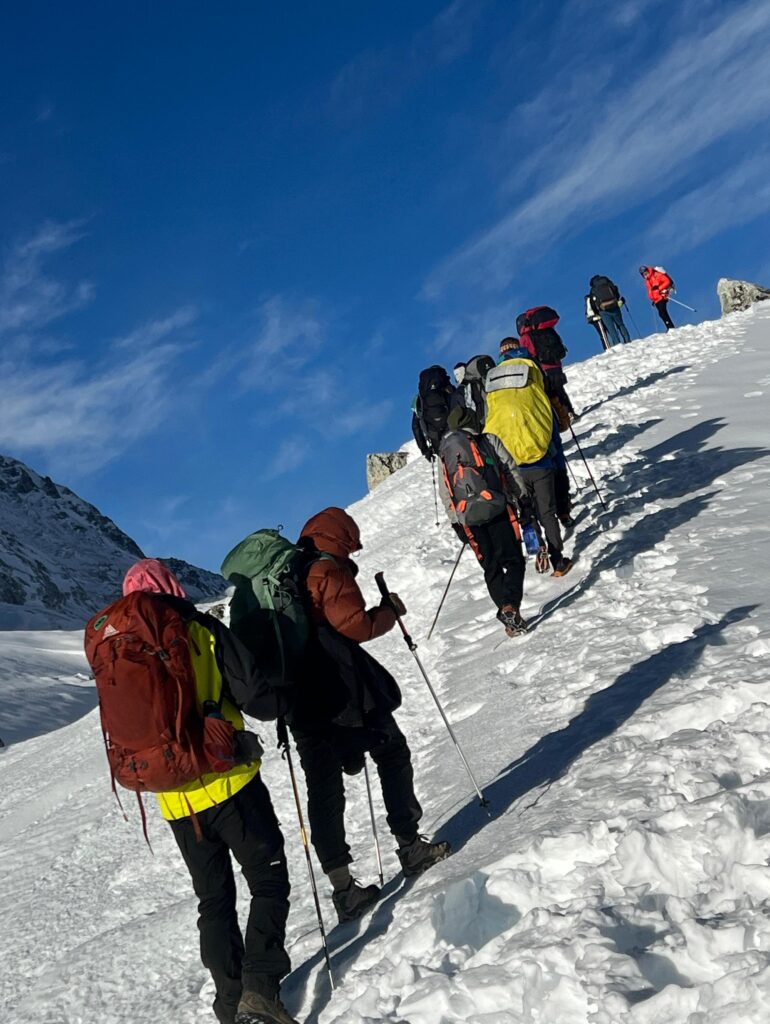
This is the most popular day hike from the village. Base camp sits at 4,800 m, around 5 km away, and the round trip takes 6 to 7 hours. It also fits the classic “climb high, sleep low” rule, since you come back to Samagaun for the night. If you aren’t feeling well, skip it and rest.
Set off at sunrise, when the sky is usually clear and the clouds haven’t rolled in yet. The trail rises steadily past Birendra Lake and onto rocky moraine, and the glacier and peaks feel closer with every turn. Pack plenty of water, snacks, warm layers and sunglasses, go slowly, and turn back at once if a headache or nausea gets worse.
Birendra Lake Hike
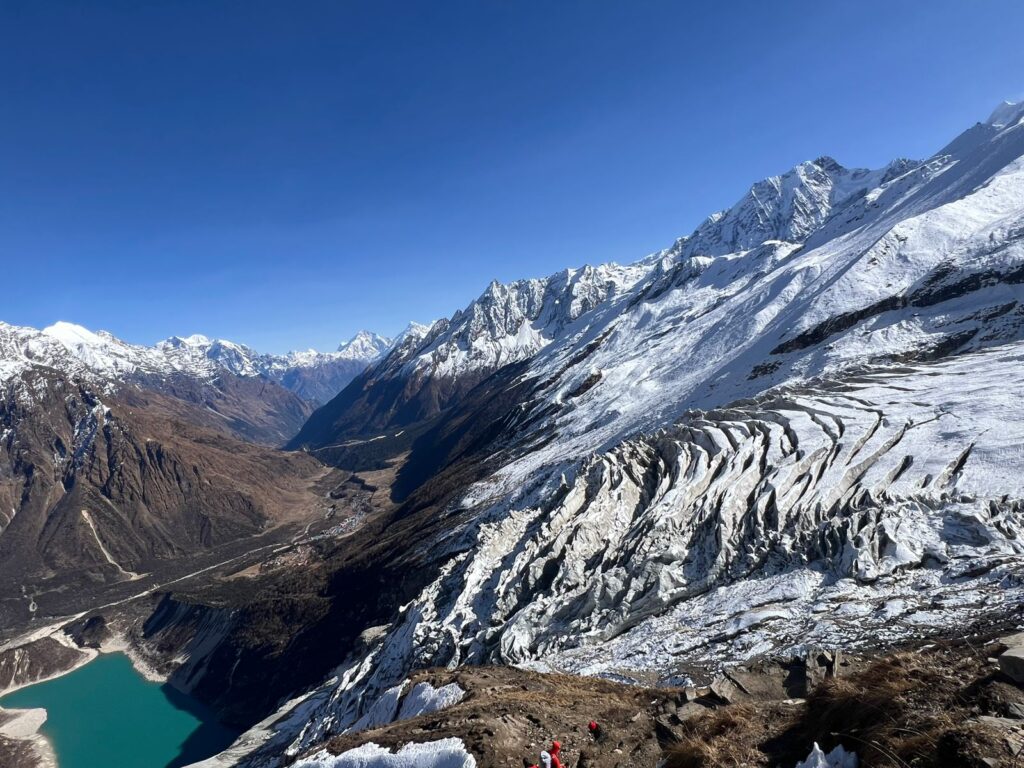
This one is easy and gentle. The glacial lake is only about 3 km from the village and takes 1 to 1.5 hours to reach. It lies on the way to Manaslu Base Camp, so it also works as a shorter outing.
The milky turquoise water against the grey moraine and white peaks makes a beautiful photo. It’s a nice walk for your first afternoon, or for a lighter day if your legs are tired. Sit by the shore for a while and enjoy the quiet.
Pungyen Gompa Visit
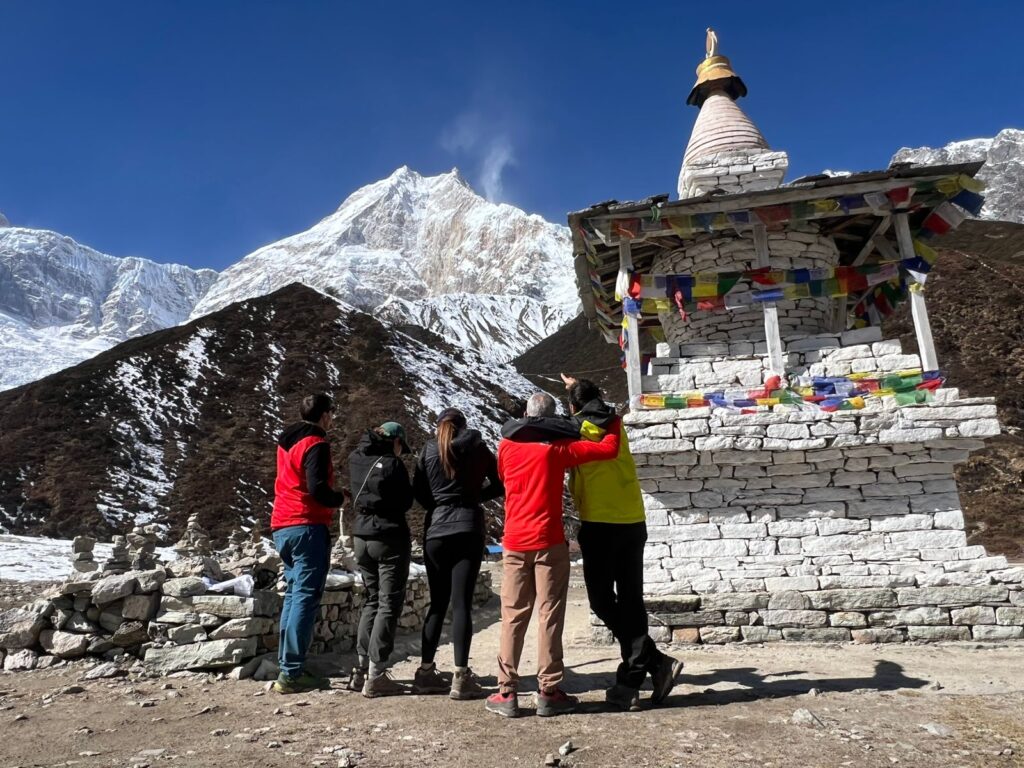
Pungyen Gompa is the most sacred and scenic monastery around. Nobody knows exactly when it was built, but locals believe it is 500 to 600 years old and was founded by Tibetan Buddhist masters. The path goes through grassy alpine slopes, and you may spot wildlife on the way.
Prayer flags and big mountain views surround the gompa, and it stays peaceful even in trekking season. The walk up also makes a gentle acclimatization hike. Go in the morning, take off your shoes at the door, walk clockwise and ask before taking photos. If monks are there, a polite greeting may earn you a blessing.
Why the Rest Day Matters
Altitude sickness can affect anyone above roughly 2,500 m, and Samagaun is where the risk starts to climb. The idea is simple: go up high during the day, then come back down to sleep lower. A hike to Manaslu Base Camp (4,800 m) followed by a night at 3,530 m does exactly that.
Beyond Samagaun, the trail gets more remote and evacuation becomes harder. Samdo and Dharamsala only have basic lodges and very little medical help, so this rest day is one of the smartest safety choices you can make.
Know the Warning Signs
- Mild: headache, light nausea, poor appetite, trouble sleeping.
- Moderate: bad headache, vomiting, extreme tiredness, dizziness.
- Severe: confusion, trouble walking straight, breathlessness at rest, chest tightness.
With moderate symptoms, skip the base camp hike and rest. If they last more than 24 hours or get worse, go down to Lho or lower right away. With severe symptoms, descend immediately.
Quick Prevention Tips
- Walk slowly and steadily.
- Drink 3-4 liters of water a day.
- Avoid alcohol and sleeping pills.
- Eat regular meals, even if you aren’t hungry.
- Tell your guide straight away if you feel unwell.
A mild headache on the first night is common and usually fades with rest and water.
Where You’ll Stay
Samagaun has around 15 to 20 teahouses and lodges, far more choice than Samdo. Rooms are simple: twin beds, foam mattresses and thick blankets. Bathrooms are usually shared, with squat toilets. Newer lodges tend to be warmer and cleaner, so ask your guide to pick one.
Many lodges give you a room for little or nothing if you eat your meals there. Dal bhat is the most reliable and filling meal at this height, and boiled water is a greener choice than bottled. Everything is carried in, so menus and supplies are limited. Mobile coverage exists but weakens in bad weather, and WiFi is slow and unreliable, so don’t count on video calls.
Mountain Views Around the Village
From a lodge rooftop or the hill above the village, you can see the entire south face of Mount Manaslu and its glacier. At sunrise, the summit catches the light first and glows gold.
| Peak | Elevation |
|---|---|
| Mount Manaslu | 8,163 m |
| Himalchuli | 7,893 m |
| Ngadi Chuli | 7,871 m |
| Manaslu North | 7,157 m |
The valley floor is wide and flat, so getting around the village is easy. Yak pastures turn brown after the first autumn frost, and the hillsides are covered in juniper and dwarf rhododendron.
Best Time to Visit Samagaun Village
The best time to visit Samagaun Village depends on what you want from your trek. Most people choose spring or autumn, when the weather is steady, the skies are clear and the mountain views are at their best. Here is how each season feels.
- Spring (March–May): blooming rhododendrons, mild weather and clear skies.
- Autumn (September–November): the clearest views and the most stable weather, which makes it the best season for photos.
- Winter (December–February): very cold and snowy. Many teahouses close and Larkya La is often blocked.
- Monsoon (June–August): slippery trails, landslides, leeches and cloudy skies. It’s the least recommended time.
In late autumn, early snow can dust the higher sections, so start your days at dawn and ask locals about trail conditions.
In spring, the lower trails are covered in blooming rhododendrons, and the mild temperatures make walking and photography a pleasure. Autumn brings crisp air and golden landscapes, with the best views of Mount Manaslu and the peaks around it. These two seasons are also the busiest, so lodges fill up faster and it helps to plan ahead.
In winter, heavy snow covers the valley floor and the village shrinks to just a handful of resident families, while the higher passes can close completely. During the monsoon, clouds often hide the peaks and the trails turn slippery, although heavy rain is rare at this height. If you want safe trails, comfortable days and the best chance of clear mountain views, aim for spring or autumn.
Permits You’ll Need
The Manaslu region is a restricted area, so independent trekking is not allowed. A licensed guide is compulsory, and you must book through a registered trekking agency. Since March 2026, the old rule of a minimum of two trekkers no longer applies, so even a single trekker can now get the permit, as long as they go with a licensed guide. You’ll need these permits:
- Manaslu Restricted Area Permit (MRAP): issued by the Department of Immigration.
- Manaslu Conservation Area Permit (MCAP): for entering the conservation area.
- Annapurna Conservation Area Permit (ACAP): needed if you exit over Larkya La toward Dharapani.
Our Company usually takes care of the paperwork, along with transport and your guide.
Frequently Asked Questions
What is the altitude of Samagaun?
Samagaun sits at 3,530 meters (11,581 feet) above sea level.
How many nights should I stay in Samagaun?
Two nights is standard. It gives you one full day for an acclimatization hike.
Is the Manaslu Base Camp hike difficult?
It’s a long, steep day at 4,800 m, but most fit trekkers who are acclimatizing well can manage it. Go slowly and listen to your body.
Can I trek to Samagaun without a guide?
No. A licensed guide and a restricted-area permit are required.
When is the best time to visit?
Spring (March–May) and autumn (September–November).
Final Thoughts
Samagaun is where the land, the culture and the trek all come together. It’s a place to rest your body, meet a warm mountain community and get ready for the big crossing of Larkya La. Whether you spend your rest day hiking to base camp or sitting quietly beside a monastery, you’ll realise the best part of a Himalayan trek isn’t only the summit views. It’s the people and places you meet along the way.