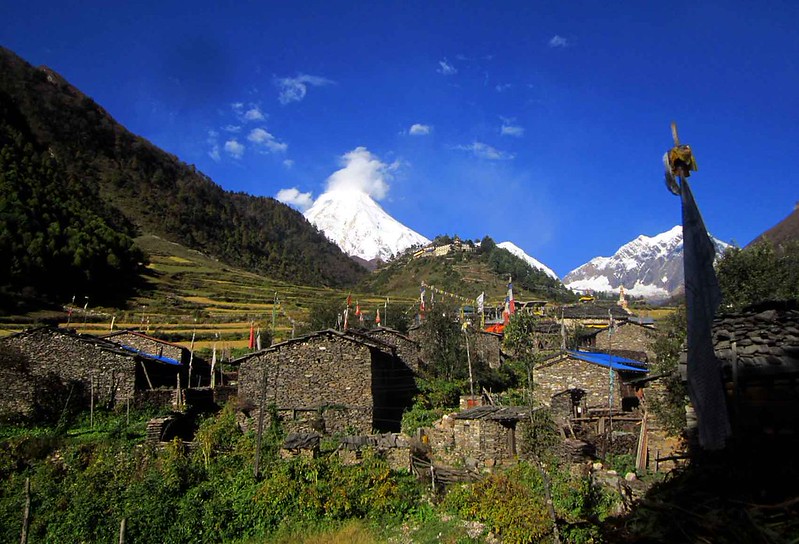
Planning to stop in Lho Village on the Manaslu Circuit Trek? Lho Village is one of the best places on the route to slow down. This stone-built village in the Nubri Valley sits at around 3,150 to 3,180 metres, and it is where many trekkers first feel the trek turning more remote and more Tibetan in character. Above the village stands Ribung Gompa, with views of Mount Manaslu on clear days.
This Lho Village Manaslu Circuit guide covers its location, Ribung Gompa, culture, permits, altitude tips, the best time to visit, and where to stay in the village’s teahouses.
Quick Facts About Lho Village
| Details | Information |
| Region | Nubri Valley, Gorkha District, Nepal |
| Elevation | About 3,150 to 3,180 m (sources vary slightly) |
| Trek | Manaslu Circuit Trek |
| Trail sequence | Namrung → Lihi → Sho → Lho → Shyala → Samagaon |
| Main attraction | Ribung Gompa |
| Mountain views | Manaslu (8,163 m) |
| Protected area | Manaslu Conservation Area |
| Best seasons | March to May and September to November |
Where Is Lho Village on the Manaslu Circuit?
Lho Village is in northern Nepal, in the Nubri Valley of Gorkha District (Gandaki Province), inside the Manaslu Conservation Area. It sits at about 3,150 to 3,180 metres on the Manaslu Circuit Trek, on the upper Budhi Gandaki River, roughly a few days’ walk from the trailhead at Soti Khola or Machha Khola. The area lies close to the Tibetan border, which is one reason the culture here is so strongly Tibetan.
On the trail, Lho comes after Namrung, Lihi and Sho, and before Shyala and Samagaon:
- Before Lho (coming from Kathmandu side): Namrung → Lihi → Sho
- Lho Village
- After Lho (towards Larkya La): Shyala → Samagaon
The approach follows the Budhi Gandaki River through forest, past suspension bridges and small settlements. Around Lho the valley opens up, and the architecture, prayer flags and mani walls show a strong Tibetan Buddhist influence. Mount Manaslu (8,163 m) is visible from the village and from Ribung Gompa on clear days.
Culture and Lifestyle in Lho
Life in Lho is closely tied to Tibetan Buddhism. Prayer flags run above paths and rooftops, chortens and mani walls line the trail, and the stone houses are built for high-altitude winters. These are living parts of the community, not decoration.
Nubri has long historical and cultural ties with Tibet. Families here have traditionally relied on farming, livestock and trade, and tourism now provides income for many households through teahouses and lodges. Walk through the village in the morning or late afternoon and you will see people tending animals, working in fields, and going about daily routines.
A few simple courtesies go a long way:
- Walk clockwise around mani walls and chortens, keeping them on your right.
- Ask before photographing people.
- Follow your guide’s advice around religious sites.
Ribung Gompa
Ribung Gompa sits above the village and is the highlight of a stop in Lho. The uphill walk takes about twenty-to-thirty minute and rewards you with views back over Lho and across the valley. On clear mornings, Manaslu dominates the skyline.
The gompa is an active place of prayer and Buddhist learning. Dress modestly, keep your voice low, and ask permission before taking photographs, especially inside or of people at prayer.
Other Things to Do in and Around Lho
- Walk the village lanes. Step off the main trail to see traditional houses, farm plots and community spaces.
- Look for mani walls and chortens. They are found throughout the area and mark the cultural landscape of the valley.
- Time your visit with a festival. Losar (Tibetan New Year), Saga Dawa and Dumje are observed in many Tibetan Buddhist communities in the region. Dates follow local calendars, so ask your guide whether one falls during your trek, and observe respectfully.
- Use it as an acclimatisation stop. An easy afternoon walk to the gompa is a gentle way to spend time at altitude.
Flora and Fauna
Lho lies within the Manaslu Conservation Area, where the vegetation changes with altitude. Lower sections of the trail pass through pine and oak forest, while higher ground turns to shrubs and alpine grasses. In spring, seasonal flowers add colour to the hillsides.
Wildlife in the conservation area includes Himalayan tahr, blue sheep and musk deer. Snow leopards live in the wider region, but sightings on a normal trek are very rare. Birdwatchers may spot the Himalayan monal (Danphe, Nepal’s national bird) and various mountain raptors. Stay on marked trails and keep a respectful distance from any animals you see.
Best Time to Visit Lho
- Spring (March to May): Comfortable temperatures and good trail conditions. Higher sections may still hold snow in early spring.
- Autumn (September to November): Often the clearest weather and best mountain views. October is the busiest month, so book accommodation early. Mornings and evenings get colder as the season progresses.
- Winter (December to February): Cold nights, icy trails and possible snow. Suitable only for well-equipped trekkers with an experienced guide, and conditions should be checked beforehand.
- Monsoon (June to August): Rain, slippery trails, landslide risk and cloud-covered views make this the least popular season.
Permits for the Manaslu Circuit
The Manaslu region is a restricted area, so permits and guiding rules apply. Trekkers generally need:
- Manaslu Restricted Area Permit (RAP)
- Manaslu Conservation Area Project (MCAP) permit
- Annapurna Conservation Area Project (ACAP) permit, as the route finishes in the Annapurna area
- A licensed guide, with a minimum group size set by regulations
Permit fees and rules change. If you book with us, we handle the permit process for you.
Altitude and Health Tips
At over 3,000 metres, Lho is high enough for altitude sickness to be a real consideration.
- Ascend gradually and don’t rush the early days.
- Drink plenty of water and avoid alcohol.
- Know the symptoms: persistent headache, nausea, dizziness, unusual fatigue and poor sleep.
- If symptoms worsen, don’t go higher, and descend if they don’t improve. Tell your guide straight away.
Accommodation, Food and Facilities
Lho has locally operated teahouses and lodges where trekkers can stay overnight. Accommodation is generally simple, with basic rooms, shared facilities in many places, and dining areas where travellers can enjoy meals after a day on the trail.
Rooms may include single or twin beds, blankets, and basic bedding. Facilities vary between lodges, so don’t expect the same level of comfort everywhere.
Some teahouses offer hot showers, but availability may depend on solar heating, gas systems, weather, and the lodge’s facilities. Hot showers may also come at an additional cost.
Food is usually served in communal dining areas. Popular trekking meals include Dal Bhat, noodles, soups, momos, fried rice, potatoes, and other simple dishes. The menu may vary depending on the lodge and the availability of supplies.
Accommodation prices also vary. Rather than relying on older price estimates, it is best to confirm room rates, shower costs, and meal prices with your trekking guide or lodge when you arrive.
Staying in locally operated teahouses is also a way to support the communities along the Manaslu trekking route.
Frequently Asked Questions
How high is Lho Village?
About 3,150 to 3,180 metres above sea level, depending on the source.
What is Lho famous for?
Ribung Gompa and its views of Mount Manaslu, plus its well-preserved Tibetan Buddhist culture.
Which villages are next to Lho on the trek?
Sho is just before it, and Shyala and Samagaon come after it.
Do I need a guide to trek to Lho?
Yes. The Manaslu region is a restricted area, so a licensed guide is required.
Is altitude sickness a risk at Lho?
It can be. Lho is above 3,000 m, so ascend gradually, stay hydrated and tell your guide about any symptoms.
When is the best time to visit?
March to May and September to November.
Plan Your Manaslu Circuit Trek with Around Manaslu Trek
Lho is worth more than a quick overnight stop. With a little extra time, you can visit Ribung Gompa, walk the village and get a feel for life in the Nubri Valley before heading on to Shyala and Samagaon.
At Around Manaslu Trek, we help travellers plan the Manaslu Circuit, including permits, licensed guides, accommodation and itineraries at a comfortable pace.